

Friday, July 19, 2013


Tuesday, July 16, 2013
Daily Candy's A Somewhat-Long List of Short Stories
America's collective attention span is dwindling as technology encroaches on every aspect of our lives. Below, The Daily Candy lists some fabulous short story collections. These will work for attention spans of all shapes and sizes!


http://www.dailycandy.com/everywhere/flipbook/147567/Best-Short-Stories
http://www.dailycandy.com/everywhere/flipbook/147567/Best-Short-Stories
Friday, June 14, 2013
Thursday, March 21, 2013

Friday, February 22, 2013

Saturday, January 19, 2013
Poet Richard Blanco at the Inauguration!
Read this article before you head into DC for the Inauguration!
http://www.nytimes.com/2013/01/09/books/richard-blanco-2013-inaugural-poet.html?emc=tnt&tntemail1=y&_r=1&
http://www.nytimes.com/2013/01/09/books/richard-blanco-2013-inaugural-poet.html?emc=tnt&tntemail1=y&_r=1&
Saturday, December 22, 2012

Saturday, December 8, 2012
5 Great Books for The Writers in your Life
Looking for some holiday gifts for a writer? Try this website!
http://www.prdaily.com/Main/Articles/13309.aspx#
http://www.prdaily.com/Main/Articles/13309.aspx#
Wednesday, November 14, 2012

Monday, November 5, 2012
Friday, September 28, 2012
I know, I know. It's been A WHILE since I've posted. I'll make it up to you! Take a look at this great virtual poetry tour: http://www.poetryfoundation.org/gallery/walking-tours/dc/index
Friday, July 27, 2012

Wednesday, July 25, 2012
The Little Ghost
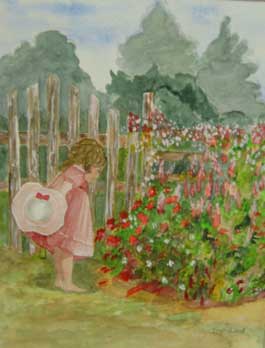
The Little Ghost by Edna St. Vincent Millay is
delightfully charming yet eerie. The ghost in this poem is not haunting or
spooky. She is mysteriously graceful and demure. The line “She smiled and smiled—there was no hint of
sadness in her face” is especially provocative. It allows readers to
come to their own conclusions about the ghost’s previous life and makes one
wonder how or why she is content with her life after death. The poem is also
intriguing because the ghost’s origin is a mystery. Perhaps she lived in the
speaker’s home once upon a time, perhaps she is someone from the speaker’s
past, or perhaps the ghost the narrator speaks of is a portion of herself she
lost long ago.
The Little Ghost by Edna
St. Vincent Millay
I knew her for a
little ghost
That in my garden walked;
The wall is high—higher than most—
And the green gate was locked.
And yet I did not think of that
Till after she was gone—
I knew her by the broad white hat,
All ruffled, she had on.
By the dear ruffles round her feet,
By her small hands that hung
In their lace mitts, austere and sweet,
Her gown's white folds among.
I watched to see if she would stay,
What she would do—and oh!
She looked as if she liked the way
I let my garden grow!
She bent above my favourite mint
With conscious garden grace,
She smiled and smiled—there was no hint
Of sadness in her face.
She held her gown on either side
To let her slippers show,
And up the walk she went with pride,
The way great ladies go.
And where the wall is built in new
And is of ivy bare
She paused—then opened and passed through
A gate that once was there.
That in my garden walked;
The wall is high—higher than most—
And the green gate was locked.
And yet I did not think of that
Till after she was gone—
I knew her by the broad white hat,
All ruffled, she had on.
By the dear ruffles round her feet,
By her small hands that hung
In their lace mitts, austere and sweet,
Her gown's white folds among.
I watched to see if she would stay,
What she would do—and oh!
She looked as if she liked the way
I let my garden grow!
She bent above my favourite mint
With conscious garden grace,
She smiled and smiled—there was no hint
Of sadness in her face.
She held her gown on either side
To let her slippers show,
And up the walk she went with pride,
The way great ladies go.
And where the wall is built in new
And is of ivy bare
She paused—then opened and passed through
A gate that once was there.
Monday, July 9, 2012
I suppose I've been neglecting poetry a bit...
William Blake’s 1794 Poison
Tree, a
poem in his Songs of Experience
collection, is lyrical yet sinister. Just like the speaker in the poem, Blake
is devious in the construction of his work. The poem feigns cheerfulness and
even appears on the page as a nursery rhyme might. However, as each stanza
progresses the tone grows darker and darker ascending to its murderous conclusion.
The poem seems to be a comment on human nature and goodness. It analyzes the
ill- effects of holding a grudge. Blake brilliantly weaves a literal and
metaphorical world together. As the narrator’s hatred grows deeper and deeper,
it becomes more tangible until finally it is manifested in reality.
A Poison Tree by William Blake
I was angry with
my friend;
I told my wrath, my wrath did end.
I was angry with my foe:
I told it not, my wrath did grow.
And I watered it in fears,
Night & morning with my tears:
And I sunned it with smiles,
And with soft deceitful wiles.
And it grew both day and night.
Till it bore an apple bright.
And my foe beheld it shine,
And he knew that it was mine.
And into my garden stole,
When the night had veiled the pole;
In the morning glad I see;
My foe outstretched beneath the tree.
I told my wrath, my wrath did end.
I was angry with my foe:
I told it not, my wrath did grow.
And I watered it in fears,
Night & morning with my tears:
And I sunned it with smiles,
And with soft deceitful wiles.
And it grew both day and night.
Till it bore an apple bright.
And my foe beheld it shine,
And he knew that it was mine.
And into my garden stole,
When the night had veiled the pole;
In the morning glad I see;
My foe outstretched beneath the tree.

Sunday, July 1, 2012

Friday, June 29, 2012
Wise Beyond Her Years

Going up the down staircase all these
years has clearly kept Bel Kaufman hale and hearty. The author stood resolutely
for the duration of her discussion with our Jewish Literature class, then
returned in the evening, vibrant as ever, to celebrate the beloved Sholem
Aleichem. The Up The Down Staircase
author spoke fervently about her years as a teacher, her time as a writer, and
the teachings of her grandfather. Yes, she was affectionate, charming and
witty, however, even these adjectives seem empty beside her name. Bel Kaufman is so much more than her
amiable demeanor and sunny disposition. She has spent almost one hundred and
one years, not merely surviving, but thriving in a harsh world. Kaufman has
been triumphant.
Like her grandfather, Bel fought many
battles throughout her life; and, like her grandfather, she has faced them with
conviction, persistence and a splash of humor. The author told our class that
she was turned down time and again because of the book’s unconventional style,
yet she clung stubbornly to its epistolary format. Bel said the book would not
have been effective had it been laden with description like a classical novel.
As the author, she wanted to remain completely absent from her work. The book “needed to be a speaking
novel,” one that could represent the “gobbledygook,” and the “bureaucracy” of
the public school system.
Although Bel had commonalities with many
of the authors who visited our class, she and Erica Jong seemed most similar.
This was not just because both were dressed to the nines and donned large
Hollywood glasses (although it is perhaps the reason I began to compare them in
the first place.) Rather, it was their fearlessness and use of humor that
united the two women. Both Jong and Kaufman explore serious content but do so
in a way that compels a reader to laugh. In this way, both women seem to take
after Sholem Aleichem. Kaufman
spoke about Aleichem during both the afternoon and evening events. She called
him “a great humorist” but noted that his “subjects are not funny at all.” The
documentary Sholem Aleichem: Laughing in the Darkness further illustrated her point. In times
sorrow, Aleichem chuckled. He returned time and again to laughter as a means
for survival.
Bel began her afternoon discussion with
our Jewish Lit Live class by asking how many people believed that her book was
funny. Most of us raised our hands. “Its not,” she said sternly. “Its actually
a very sad book about miscommunication.”
While the message of her book is serious, many passages within Kaufman’s
novel are so absurd one has to laugh. This is exactly the point. In her article,
At 95, Running Up The Down Staircase, Sandee
Brawarsky compares Kaufman and her grandfather simply yet aptly. The author
says, “she’s a writer like him, able to combine humor and compassion”
(Brawarsky). When Erica Jong spoke about Fear of Flying, she also discussed this
dichotomy. “When people laugh,” Jong had said, “ I hope they will laugh with
recognition.” This statement seems appropriate for the work of Kaufman and
Aleicham as well. All three authors masterfully demonstrate how humor can
overcome adversary.
It’s
no wonder Kaufman continued to teach for decades after Up The Down Staircase became a best seller. She still had (and
has!) so much to say. Her life is replete with stories, anecdotes and wisdom. Teaching
seems to run through her veins. As Brawarsky notes, “she's a great storyteller,
sharing tales in her deep voice of an engaging life.” Even now, when she has
long since left the hallways of her public school, Kauffman remains a true
educator. Teaching was never just an occupation, nor simply the premise for her
book, it’s been a facet of Bel’s being entirely. Once Bel passed her exams, she “was teaching for the rest of [her]
life.” “When I talk to you now,” Bel said, I’m still teaching.”
In perhaps the most poignant moment of our
afternoon discussion, Bel Kaufman spoke about a teacher’s immortality, stating
that “a teacher who showed you the way lives on in memory.” Wednesday night’s
documentary further emphasized this idea. Aleicham’s stories contained messages
about life, family, grief, and poverty. His tales live on, and so, he too
remains. Kaufman refers back to her grandfather often. He is a ubiquitous force
in her life, just as she claims all good teachers are on their students.
Book reviewer Garson Kanin states in a
quote appearing on the cover of Kaufman’s book, that Staircase is “pertinent useful, charming, important and utterly
adorable.” This describes both the work and the author in general. She is so
sweet and compelling that it is difficult to find fault with anything she says.
And yet, at times I found myself challenging her belief that all it takes to be
a truly great teacher is “to care.” While the sentiment is lovely, this idea
seemed awfully simplistic. Doesn’t a teacher also need a solid method and the
energy to push against an administration? This does not mean that Kaufman’s advice was
unwarranted, however. In fact, there was something deeply gratifying about
seeing the idyllic, optimistic Syl Barrett still alive in Bel.
Kaufman, like the previous four authors,
detailed the importance of empathy and the need to identify with your
characters as a writer. Her compassion springs directly from her own personal
experiences. The author discussed one Puerto Rican child who always sat
silently in the back of her class , hindered by the language barrier in the
room. Of course, Kaufman understood; she too had to adapt to a new language, a
new world and a new way of life as a child. “Been there, done that,” Bel said, smiling.
Sandee Brawarsky says that Kaufman “has
no secrets of longevity; she chalks up her energy and good health to good luck”
(Brawarsky). Personally, I think her long life is the result of her
persistence. That, and perhaps a bit of selfishness from her readers; those
desperate to hang on to the teachings of Kaufman and who refuse to seal the portal
to the world of Sholem Aleichem.
Brawarsky, Sandee. 2006. At 95, running up the down
staircase. The New York Jewish
Week,
May 05, 2006. http://search.proquest.com/docview/362520146?accountid=11243
(accessed April 24, 2012).
Thursday, June 21, 2012
The Library of Congress Celebrates Gwendolyn Brooks!

Gwendolyn Brooks is a woman of brilliant
contradictions. On Thursday, June 7th the Library of Congress
celebrated the Pulitzer prize-winning poet’s birthday at an event that seemed
to capture the essence of Brooks. Her work was serious but jocular, acerbic but
placid. Presenter and poet Kyle Dargan said aptly that she has a magical way of
being “dark and funny.” The compelling thing about Brooks’ work, is the way her
incongruities thread together into one unyielding knot. In “We Real Cool” the
poet manages to both condemn and identify with her subjects. Dargan informed
audience members that the she crafted what is considered by many to be her most
famous piece, after spotting a crowd of kids in a pool hall and wondering “how
they feel about themselves.” In eight short lines the poet has not only created
a voice for her subjects and established a smooth, jazzy rhythm, she has also
instigated thoughts relating to authority, society and youth.
Poet
and children’s librarian Janice Harrington gave profound insights into Brooks’
work and the intention behind it.
“Gwendolyn Brooks was of the mind that we are all each other’s
business,” Harrington said. She went on to imply that Brooks’ poetry tries, in
many ways, to show the importance of taking care of one another. From A Street in Bronzeville and Annie Allen to Maud Martha Brooks
provides insights into an eclectic group of characters. Her work travels from
“the hood” to Beveley Hills and back. Her poems, as Harrington said, “examine
the dignity of people,” despite the neighborhood in which they live. With
cadence and audacity Gwendolyn Brooks, as Harrington stated, used “her words as
instruments of hope.”
Want more on Brooks? Check out Haki R Madhubuti's book:
Honoring Genius Gwendolyn Brooks: The Narrative of Craft, Art, Kindness and Justice

Sunday, June 17, 2012

Wednesday, June 13, 2012
Erica “Fearless” Jong

Erica
Jong is described in a 1975 Time Magazine article, as “a pretty, blonde
woman with an expansive smile.” The author “is giggly and ebullient, sprinkling
her talk alternately with four-letter words and literary allusions.” This description may have been written
thirty-seven years ago, but it is just as apt today. At first, the author appeared guarded, hidden behind her
leather jacket and leopard-print scarf. She even seemed to have a twinge of
condescension in her demeanor. However, this proved to be largely my own
preconceived notions as, minutes into our discussion, she shed this persona
entirely. She peeled off her jacket, removed her scarf and, in the ultimate
transformative moment, removed her enormous sunglasses, appearing at once more
relaxed and amicable.
Right
from the beginning, Erica stood in blatant contrast to the other authors of the semester. With (to quote Jong herself) “dare I say penetrating” humor and
guileless remarks, the author’s candor added new dimension to both her own
novel and the course in general.
Many of the Jewish Lit Live authors have been charming, yet relatively
pensive and introverted. In fact, these characteristics were becoming the
status quo for our author visits. With a refreshing, forthright personality,
Jong obliterated this trend. She spoke with a certain spark. Her sarcasm and
emphatic nature teetered on the brink of hyperbole at times, but Jong
ultimately grounded her statements in (at least some version of) reality.
At
times while reading Fear of Flying, I
had sided with the Times article
which deemed the book “ shapeless” with a “self-indulgent plot” and “too prone
to phrases like ‘our mouths melted like liquid.’” I see now that perhaps Jong’s
exaggerations and elaborate metaphors do not, like the article implies and like
I claimed initially, replace the author’s authenticity. Instead, maybe the
flowery, poetic prose mask the truth and challenge the reader to search a bit
before they find it. This is similar to the way Jong seems to conduct herself;
amidst her one-liners and amusing anecdotes, the author tucked profound
insights and ideas.
When
Pearl Abraham came to visit, she immediately drew a palpable distinction
between herself and the protagonist of The
Romance Reader. This was not the case for the Fear of Flying author. Both Jong and her character Isadora Wing are
intriguing because of their inconsistencies; they have the ability to be
simultaneously sardonic and sweet. Erica, like her protagonist, was a fountain
of information. She bubbled with quotes from authors, book trivia, and
historical facts. While she was open to every type of question, at times she
veered from the subject at hand.
An aside would turn into a story or a simple answer would become a
tangent to a more complex subject matter.
It was in these digressions that the Erica would unveil a gem of wisdom.
Isadora’s confessions mimicked Jong’s responses. Both found their greatest
stories once they swerved from an original path.
Although
our class has been warned repeatedly to avoid categorizing an author and her
protagonist as one in the same, Jong and Wing came as a unit. At times it
seemed like the author had decided to become her book’s protagonist for the
purpose of discussing Fear of Flying.
The truth, however, is that Isadora and Erica actually are, mostly, one in the
same; the lines between them are indelibly blurred. Some authors protest being
compared to the characters they create. Erica embraces it, acknowledging that
the book is "an interweaving of fiction with reality" (Time).
In
the book that Jong openly admits is a “bit of a rant,” Isadora often speaks in
melodramatic tones or confronts the sinister themes in life with wit and a touch
of absurdity. Despite the subject matter, humor saturates the pages of Fear of Flying. Erica’s ability to be
both side-splitting and serious may have been one of the reasons the
mock-memoir had such success. It reads as both a ground-breaking and important
novel which altered the feminist movement and a comic guilty pleasure. The reason for this dichotomy is
simple; Jong explained that “humor makes the medicine go down.” It allows us to
addresses the harsh realities of the world in a way we can stomach. Fear of Flying gives women a way to
approach taboo subjects. The important thing, Erica explained, is that when
people laugh at the book, “they laugh at it with recognition.”
During
the evening event, Erica described her growth as a writer but noted that the
main themes in her work have stayed the same from her college years to today.
When she read her story Kiss from the
Sugar in My Bowl short story
anthology, this became immediately apparent. With the same intimate tone seen
in Fear of Flying, Jong once again
confronted femininity and what the author called the “psychological games that we play with ourselves and with
each other.” She harkened back to the idea of the “zipless fuck,” expressing
one woman’s desire to have sex without having to deal with the emotional
repercussions. Sex, fear, passion
and inner turmoil, were just as pervasive in Kiss as they had been in her work three decades earlier.
While
her advice to budding writers was in many ways similar to the tried and true
advice we’ve heard before, her methods were also unique and innovative. When
Jong described her work on her current book, she said that at times when she
was writing she thought it might be a memoir. At other times she said it seemed
like fiction. Sometimes, she believed it would be another Isadora Wing
installment. This spoke volumes about Jong’s ability to make fiction and the
real world interact. Erica does
not imagine new worlds or create characters out of nothing, as some authors do.
Rather, she chooses to examine reality, at times contorting it to her liking.
This is a perilous yet inspiring decision because it forces an author to take
part in deep self-reflection, something Erica seems to know how to do. “You
have to write for yourself” she assured our class, “write about the thing you
feel a need to write about.”
"The
Loves Of Isadora." Time 105.5
(1975): 93. Academic Search Complete.
Web. 11 Apr. 2012.
Thursday, June 7, 2012
Goodbye Ray Bradbury
Yesterday, the world lost another literary giant. A few excerpts from the Huffington Post and Chicago Tribune below. Read the articles here and here.


During his acceptance speech for an honorary National Book Award in 2000:
"Everything I've done is a surprise, a wonderful surprise... I sometimes get up at night when I can't sleep and walk down into my library and open one of my books and read a paragraph and say, `My God, did I write that? Did I write that?', because it's still a surprise."--Huffington Post article by By Mallika Rao and Gazelle Emami
"His gift for storytelling reshaped our culture and expanded our world. But Ray also understood that our imaginations could be used as a tool for better understanding, a vehicle for change, and an expression of our most cherished values."-- --Chicago Tribune article by Carmel Dagan
Subscribe to:
Posts (Atom)
